There’s no single “best day” to book a cruise — but there are clear windows where prices fall, and knowing them can save you hundreds. Here’s how cruise pricing actually works, and when to pounce.
Cruise fares move constantly
Like flights, cruises use dynamic pricing. The fare you see today isn’t fixed — it rises as a ship fills and drops when cabins sit empty. That means the same cabin can swing in price many times before sailing. The goal isn’t to guess the bottom; it’s to recognise a genuinely good price when it appears.
Should you book at launch?
Launch prices are often — but not always — excellent. The only way you’ll know if it’s a great price at the start, is to watch and learn over time. The down side to booking so far out is deposits, Check if they are refundable, in many cases they are not. We’ll talk insurance another time
“Wave season” — January to March
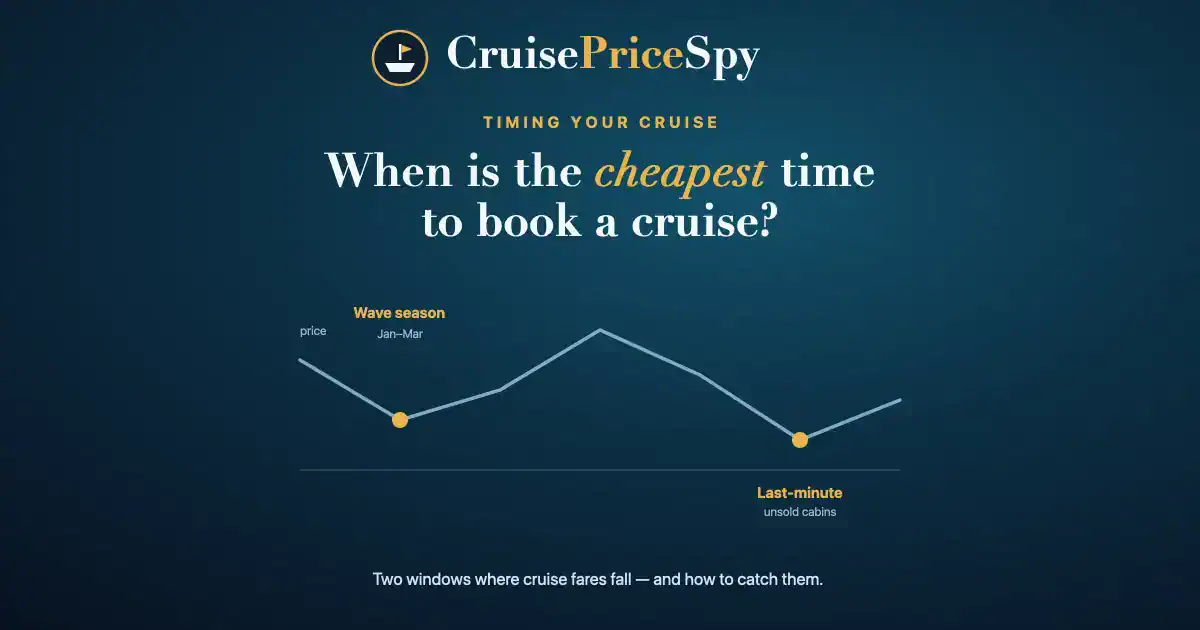
The cruise industry’s big sale period runs roughly January through March, known as wave season. Lines launch their best promotions of the year to fill cabins — think free drinks packages, onboard credit, reduced deposits, or kids-sail-free deals. If you’re planning ahead, this is prime hunting time.
Book early for choice, late for price
There are two sweet spots, and they suit different travellers:
- Early (6–18 months out): the widest choice of cabins, dining times and itineraries, plus the best early-bird perks. Ideal for school holidays, suites, or a specific sailing you don’t want to miss.
- Last-minute (within ~90 days): lines slash fares on unsold cabins to sail full. Brilliant value if you’re flexible on dates, cabin type and destination — less so if you need flights or specific dates locked in.
The squeeze in the middle (roughly 3–6 months out) is often where prices are highest.
Sail in the shoulder season
When you sail matters as much as when you book. Shoulder seasons — spring and autumn — usually undercut peak summer and Christmas sailings, often with better weather and quieter ships. A Mediterranean cruise in May or September can be dramatically cheaper than the same route in August.
Don’t be fooled by a “sale”
A countdown timer and a big red “SALE” badge don’t guarantee value. The only way to know if a price is genuinely good is to compare it against the Price Per Person Per Night (PPPN) for that route. If it’s below the typical PPPN, it’s a real deal. If not, it’s just marketing.
(New to PPPN? Read our guide →)
Let the tracker do the watching
Rather than refreshing cruise-line sites and trying to time the market, let prices come to you. Our free tracker monitors live fares across Cunard, Royal Caribbean, Virgin Voyages and P&O, ranks them by PPPN, and flags genuine price drops and lowest-yet fares — so you catch the dip without the legwork.
CruisePriceSpy is free to use. We only earn a small commission if you click through and book — at no extra cost to you.